
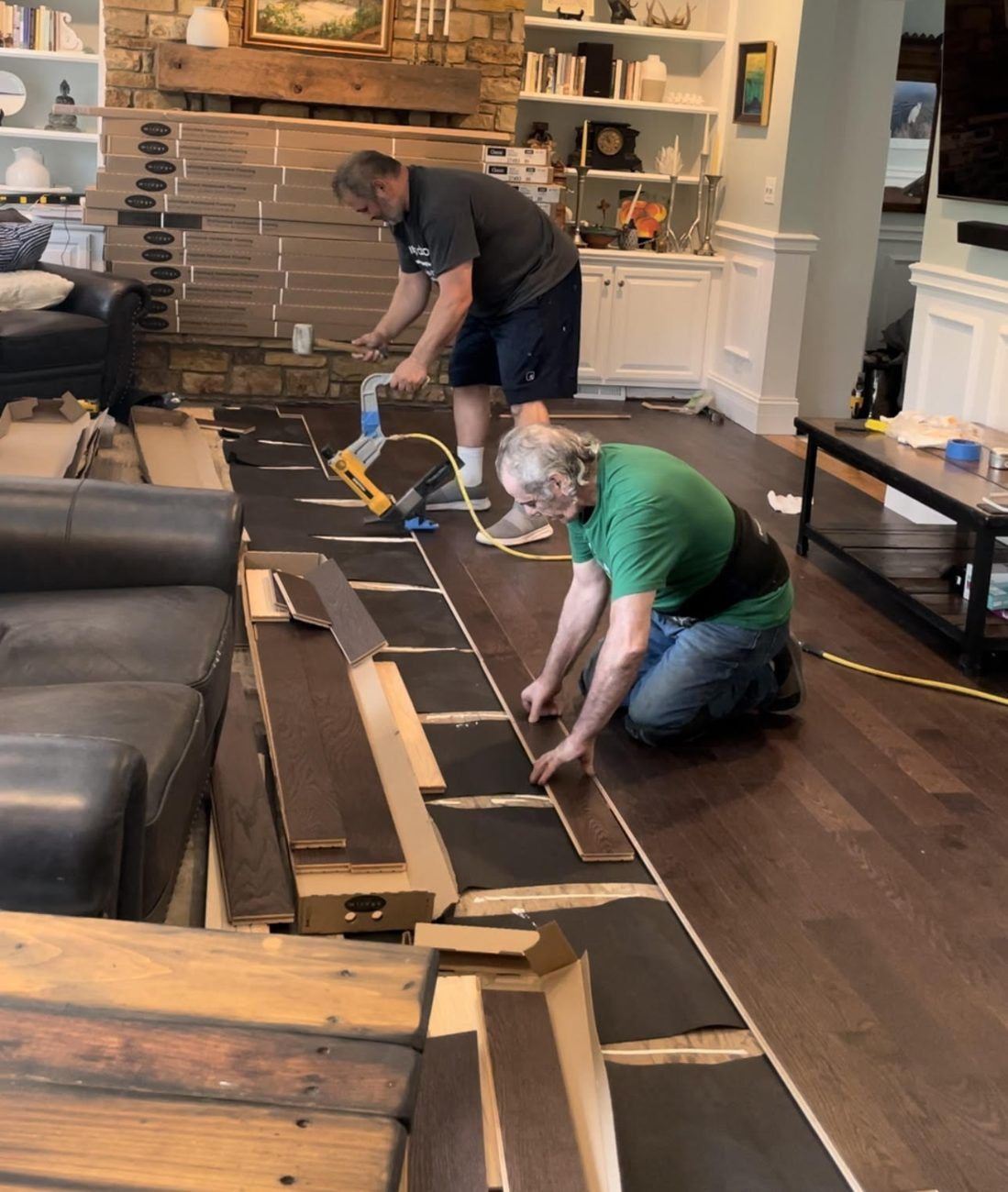
A black floor makes a statement. Next to white walls and light cabinets it looks crisp and modern, and in a room with good daylight it can look dramatic in the best way.
It’s also the least forgiving color you can put down. Before you commit, here’s how black and near-black floors behave in each material, what living with one is really like and the rooms where it makes the most sense.
Black Floors by Material
Hardwood
Black hardwood is almost always a stain. Oak is a common base because its grain shows through even very dark stains, which keeps the floor from looking like a flat painted surface.
The catch is that the color sits on the surface. A deep scratch or a dent that breaks the finish can expose lighter wood underneath, and the busiest paths will eventually look lighter than the rest of the room.
The upside is that hardwood can be sanded and refinished, so the color can be redone down the road. Naturally dark species like walnut read deep brown rather than black, which is worth knowing if you want dark without stain.
Vinyl Plank
In luxury vinyl plank, the black is printed into a design layer under a clear wear layer, so the color itself can’t scratch off. What you see instead are fine, light scuffs on the wear layer. A matte or embossed surface hides them better than a smooth, shiny one.
Most vinyl plank is sold as waterproof, which makes a black LVP a practical choice for a kitchen, bath or basement.
Laminate
Laminate also uses a printed image, protected by a very hard top layer. That hard surface resists scratches better than most floors, and that matters more on black than on any other color. Check the AC rating and look for AC3 or higher for busy rooms.
Tile
Black porcelain tile is extremely durable and isn’t bothered by water. Slate gives a natural black look but needs sealing. Either way, the trade-offs are grout lines that collect dust and a hard, cold surface underfoot.
What Living With a Black Floor Is Like
Dark floors hide some kinds of mess and spotlight others. Expect to notice these right away.
- Dust, lint and crumbs as soon as they land
- Pet hair from light-coated dogs and cats
- Footprints and smudges, especially on glossy finishes
- White salt residue near the doors all winter
- Water spots that dry into rings
- Rug and furniture outlines where sunlight has faded the floor around them
None of that is a reason to skip black. It just means quick daily upkeep is part of the deal.
For wood floors, the National Wood Flooring Association recommends dry cleaning methods like a dust mop or a vacuum on its bare floor setting. It warns that wet mops and steam mops damage the finish and the wood over time. A wide microfiber dust mop does most of the work on a black floor.
Choose a Finish That Forgives
Sheen matters as much as color. The NWFA notes that the less sheen a floor has, the less you’ll notice small scratches and normal wear. On a black floor, matte or satin is the safer choice.
Texture helps too. Wire-brushed or hand-scraped wood and embossed vinyl or laminate break up the surface, so dust and fine scratches don’t stand out as clearly.
You can also go near-black. Charcoal, espresso and very dark brown floors give much of the same look with noticeably less upkeep, especially when the boards have some color variation.
Tips for a Busy Home
- Put a mat outside and inside every exterior door to catch grit and salt before it spreads.
- Make shoes-off the house rule if you can. It cuts the dust and the scratches.
- Add felt pads under chair and table legs, which the NWFA recommends for any furniture that touches a wood floor.
- Lay runners or rugs in the paths everyone walks.
- Use blinds or shades on sunny windows to slow uneven fading.
Where Black Floors Work
- Bright rooms. Dark floors absorb light, so they suit rooms with plenty of windows better than dim ones.
- Lower-traffic rooms. Dining rooms, formal living rooms, bedrooms and home offices.
- Modern kitchens. White or light cabinets over a black floor is a classic contrast.
- Offices and shops. Commercial spaces with a regular cleaning routine can carry a black floor well.
Where They Struggle
- Entries and mudrooms that take in salt, sand and slush every winter
- Homes with light-colored pets
- Dim rooms, where a black floor can make the space feel smaller and darker
- Households where nobody wants to dust mop most days
A Quick Comparison
| Material | How the black is made | What shows most | Best fit |
|---|---|---|---|
| Hardwood | Stain on real wood | Dust, and scratches through the stain | Dining rooms, bedrooms, bright living rooms |
| Vinyl plank | Printed design layer | Dust and fine scuffs | Kitchens, baths, basements |
| Laminate | Printed layer under a hard top | Dust, with fewer scratches than most | Living areas and hallways |
| Tile | Porcelain or natural stone | Dust in the grout lines | Entries and baths |
If you’re weighing a dark floor, our flooring services page covers the hardwood, vinyl plank and laminate floors we install in homes and businesses. Quality Installs is a family-owned flooring company in Glenview, and estimates are free.
Torn between extremes? Our guides to white flooring and grey flooring cover the other end of the palette.