
Vinyl Floors
Is Vinyl Flooring Right for Me? An Honest Look at the Pros and Cons
An honest guide to whether vinyl plank flooring fits your home, with pros and cons, the rooms it suits best and when hardwood or laminate is the better pick.
Waterproof Plank That Looks Like Wood
Luxury vinyl plank gives you the look of wood with a surface that handles spills, pets and busy kitchens. We install it in homes and businesses across the North Shore and northwest suburbs.
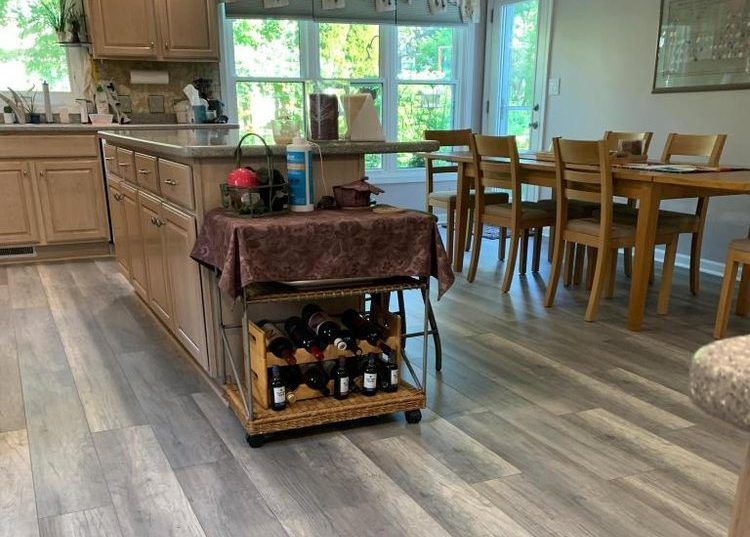
Luxury vinyl plank, or LVP, is a layered vinyl floor with a printed wood look under a clear wear layer. Many products click together and float over the subfloor, and a lot of them are sold as waterproof.
That makes it a practical pick for kitchens, bathrooms, laundry rooms and basements, where hardwood and laminate can struggle with water. It's also warmer and quieter underfoot than tile.
Quality Installs has been installing floors since 2004, and every installer is licensed, bonded and insured. We're a family-owned Glenview flooring installer, and you can see what customers say about our work on the reviews page.
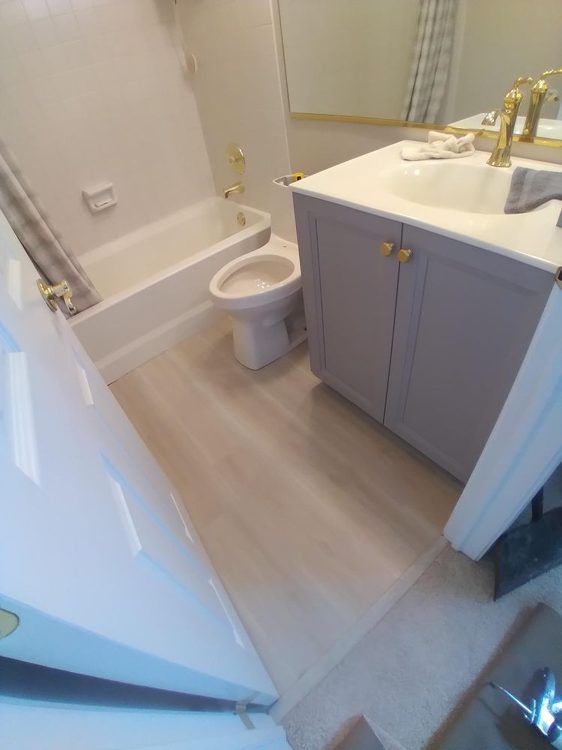
The job starts with measuring each room and planning the plank direction, the seams and where transitions go. Good layout keeps end joints staggered and avoids thin slivers of plank along the walls.
Vinyl plank shows what's under it, so a proper install starts with a clean, flat subfloor. High spots get ground down and low spots get filled before the first plank goes in.
Most rigid core planks lock together and float, with no glue or nails holding them to the subfloor. A small gap at the walls and around pipes lets the floor expand and contract.
Trim covers the gap at the walls, and transition pieces finish doorways and the edges where vinyl meets another floor. The job ends with cleanup and a walkthrough of the finished floor.
Vinyl plank is built a few different ways, and the core decides how it feels and where it works best. The wear layer on top, measured in mils, decides how well it holds up to traffic, and it matters more for durability than the overall thickness of the plank.
SPC planks have a dense stone-plastic composite core that's firm underfoot and resists dents from heavy furniture. They're a strong fit for busy homes and high-traffic spaces.
WPC planks use a wood-plastic composite core with a little more give, so they feel softer underfoot. Their thicker build is also more forgiving of small subfloor imperfections.
Thinner, flexible planks are glued straight to the subfloor and are common in commercial spaces. They need more subfloor prep than floating planks. [Bob to confirm: whether Quality Installs installs glue-down vinyl plank]
Ridges, dips and debris under vinyl plank can show through the surface or stress the locking joints over time. Many manufacturers want the subfloor flat to within 3/16 inch over 10 feet.
Concrete needs a moisture test before anything goes over it. A waterproof plank doesn't fix a damp slab, and manufacturers set limits on how much moisture the concrete can give off.
Floating floors need room to move, so they go around kitchen cabinets and islands rather than under them. The rooms should be cleared and kept at normal indoor temperatures before and during the install.
Vinyl plank usually goes in faster than hardwood, since there's no nailing or finishing. The schedule still depends on the square footage, the number of rooms and how much subfloor prep the job needs.
Bathrooms and kitchens take longer per square foot because of all the cuts around tubs, vanities, cabinets and door frames.
Some planks need time in the room before installation, while others only need it after sitting somewhere very hot or cold. The manufacturer's instructions for your planks set that step.
Your estimate is free and built around your rooms and the planks you pick. These are the biggest factors.
What moves the price
Four steps from the first call to the final walkthrough.
Call or send the form, and the crew measures your rooms and quotes the job for free.
Hardwood, vinyl plank or laminate, matched to the room, the foot traffic and the budget.
The crew preps the subfloor and lays the new floor, with a quick turnaround.
You walk the finished floor with the crew, and the job site is left clean.
“Absolutely fantastic job! Quality Installs exceeded our expectations!
Excellent communication from management, very reasonable prices, professional, fast and clean work. Really pleased to have them doing our flooring project. Will definitely contact them in the future and recommend the company.”
“Quality Installs is a business that lives up to its name. Work is thorough, communication is punctual, and working with Bob was a pleasant experience. His team is diligent and they pay attention to detail. Highly recommend!”
“The team exhibited a remarkable level of professionalism, executed the task with exceptional speed, and the results they delivered were nothing short of remarkable.”
Still have a question? Call (847) 361-0099.
Many vinyl planks are sold as waterproof, which means the planks themselves won't swell from spills. Water from a big leak can still get under the edges, so it should be cleaned up quickly, and the subfloor needs to be dry from the start.
Yes. Many vinyl plank products are approved for basements and other below-grade spaces, as long as the slab passes a moisture test and the space is heated and cooled like the rest of the house.
Sometimes. Some products can go over a flat, well-bonded hard floor, but carpet, cushion-backed vinyl and other floating floors have to come up first. We'll look at what you have during the estimate.
A 12 mil wear layer handles most homes and even light commercial use. Planks with 20 mil or more are considered commercial grade and are worth a look for big dogs or very busy households.
We source our materials from reputable suppliers and can help you choose a plank at the estimate. [Bob to confirm: whether Quality Installs supplies the flooring on every job or also installs planks customers buy on their own]
Vinyl Floors
An honest guide to whether vinyl plank flooring fits your home, with pros and cons, the rooms it suits best and when hardwood or laminate is the better pick.
Vinyl Floors
Typical national costs to install LVP and what moves a quote up or down, from plank quality and tear-out to subfloor prep, layout, room count and transitions.
Vinyl Floors
What it takes to put luxury vinyl plank in a basement, from moisture testing the slab and fixing flatness to vapor barriers, underlayment and install day.
Tell us which rooms you're redoing and when you'd like the work done, and we'll set up a free vinyl plank estimate.
(847) 361-0099