
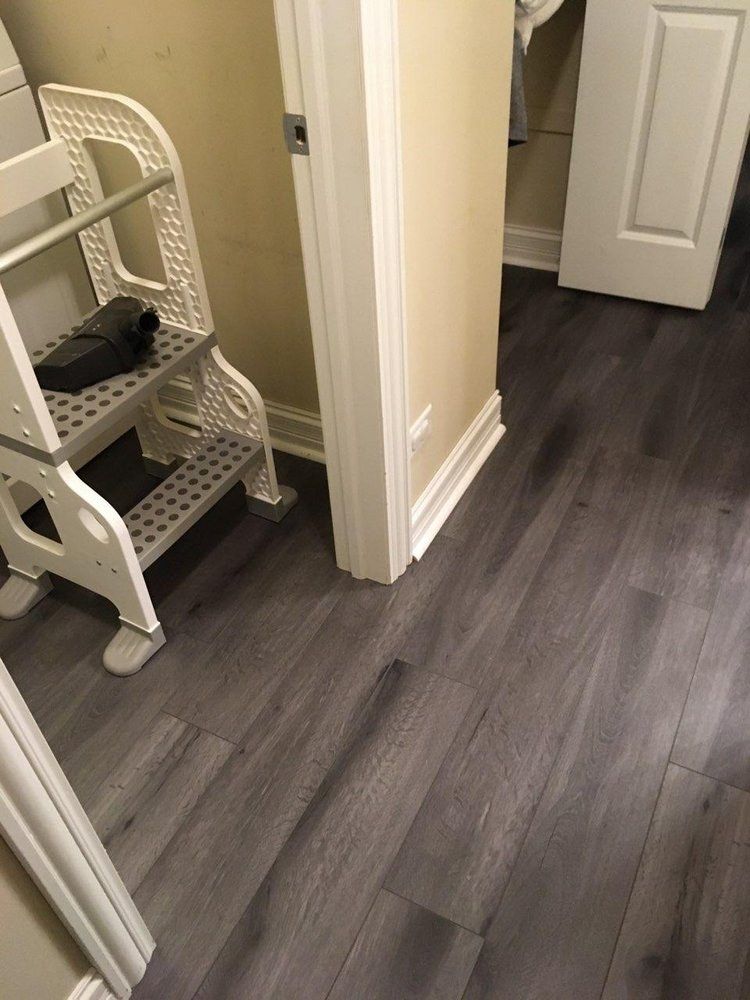
Luxury vinyl plank is a natural fit for a finished basement. Rigid core planks are waterproof, they float over the slab instead of gluing to it, and they feel warmer than bare concrete or tile.
The planks are rarely what goes wrong. The slab is.
This post covers vinyl plank only, from testing the concrete to what happens on install day. If you’re still weighing LVP against tile, epoxy, rubber and other options, see our comparison of waterproof basement flooring.
Why Vinyl Plank Fits Basements
Both main types of rigid core vinyl, SPC and WPC, are waterproof. A spill or a damp mop won’t swell them the way it swells wood. Our post on waterproof vinyl flooring explains how the two cores differ.
Most basement vinyl is a floating floor. The planks click together and rest on the slab, so they can come up later if the concrete ever needs to dry out.
There’s one big catch. A waterproof plank doesn’t make a basement waterproof. Water can still get between the seams to the slab, and a real flood can damage the subfloor and walls no matter what’s on top.
Deal With the Water You Can See First
Before anyone talks about planks, walk the basement and look for these.
- White, chalky deposits on the slab or walls, a sign of water moving through the concrete
- Dark damp spots, especially after heavy rain
- A musty smell
- Cracks that have leaked before
- A history of sump, drain or water heater trouble
Gutters, grading and drainage problems get fixed before the floor, not after. Installation guides are blunt about this. One major maker says not to install over concrete with a history of high moisture or hydrostatic conditions.
Humidity counts too. The EPA recommends keeping indoor humidity below 60 percent, ideally between 30 and 50 percent, and in many basements that means a dehumidifier running all summer.
Moisture Testing the Slab
A slab can look dry and still push plenty of moisture vapor up through the concrete. That’s why testing matters.
The Plastic Sheet Test
Tape a square of plastic tightly to the slab, leave it, then look underneath for condensation or darkened concrete. This test (ASTM D4263) indicates whether moisture is present. It doesn’t tell you how much, so treat it as a screen, not an approval.
Calcium Chloride and Relative Humidity Tests
These are the tests vinyl makers write their limits around.
- Calcium chloride (ASTM F1869). A sealed dish on the slab measures how many pounds of moisture vapor come off 1,000 square feet in 24 hours.
- Relative humidity probes (ASTM F2170). Probes set into holes drilled in the slab read the humidity inside the concrete.
The limits vary more than most people expect. Guides from two major brands allow up to 8 pounds or 90 percent relative humidity. Another sets the bar at 5 pounds or 80 percent and rules out below-grade rooms with a sump pump or floor drain altogether.
Read the guide for your exact product before you buy it, not after. Timing helps too, since a test in the humid months gives a truer picture than one in a dry stretch of winter.
Flatness Matters as Much as Dryness
Rigid planks bridge tiny flaws, but they don’t bend into dips. Rigid core guides commonly call for the floor to be flat within 3/16 inch over 10 feet, and some add 1/8 inch over 6 feet.
Basement slabs often slope toward a floor drain and rise at old cracks. High spots get ground down and low spots get filled with patch or self-leveling compound. Skip that step and you end up with planks that click, flex or pull apart at the ends.
Vapor Barrier and Underlayment
These two get mixed up, but they do different jobs.
Vapor Barrier
A vapor barrier slows moisture coming up from the slab. Some floating vinyl products recommend a 6 mil polyethylene film over concrete, with every seam taped. Your product’s guide will say whether it wants one.
Underlayment
Underlayment is cushion and sound control. If your planks have an attached pad, major brands say not to add another, and one says its pad-attached planks can’t go over a separate underlayment at all.
A soft, doubled-up cushion can let the locking joints flex, and that’s where failures start. At least one rigid core guide also rules out crumb rubber underlayments.
What to Expect on Install Day
Most of the work happens before the first plank goes down.
- Tear-out. Old carpet, pad and tack strip come up, and the slab gets scraped and vacuumed.
- Acclimation. Some products want 48 hours in the room between 55 and 85 degrees, and others need none at all. Either way, the basement should be at normal living temperature before, during and after the install.
- Prep. Grinding, patching and leveling come next, followed by the vapor barrier if the product calls for one.
- Layout. Planks usually run the direction that looks best from the main view, and every wall, post and column gets an expansion gap. That gap is typically 1/4 inch, and some products or very large rooms call for 1/2 inch.
- Built-ins. A wet bar or built-in cabinet can pin a floating floor. Guides either call for gluing the planks down under the cabinets or setting the cabinets first and running the floor to them.
- Trim and transitions. Baseboard or quarter round covers the expansion gap, and transition pieces finish doorways and edges.
Living With a Vinyl Basement Floor
Keep the dehumidifier running and emptied, especially in July and August. Wipe up spills and pet accidents rather than letting them sit at the seams.
Put felt pads under furniture, and skip rubber or latex backed mats, which can discolor vinyl. If a leak ever does happen, a floating floor is a relief, because the affected area can come up so the slab can dry.
Questions to Ask Before You Hire
A basement quote should say how the slab will be tested and which product’s limits it’s being tested against. Ask how flatness will be handled, whether prep is included and what goes under the planks.
Quality Installs is a family-owned team of flooring installers in Glenview, and luxury vinyl plank is one of the floors we install in homes across North and Northwest Cook County and North and Northeast Lake County. Our vinyl plank installation page has more on how we work.