
Choosing Floors
Choosing the Right Flooring for High-Traffic Areas
How to choose flooring for high-traffic areas like entryways, kitchens and hallways, plus homes with pets and kids, with a side-by-side comparison table.
Offices, Storefronts and Shared Spaces
Offices, storefronts and shared spaces need floors that handle constant foot traffic and still look sharp. Quality Installs installs hardwood, vinyl plank and laminate for businesses as well as homes.
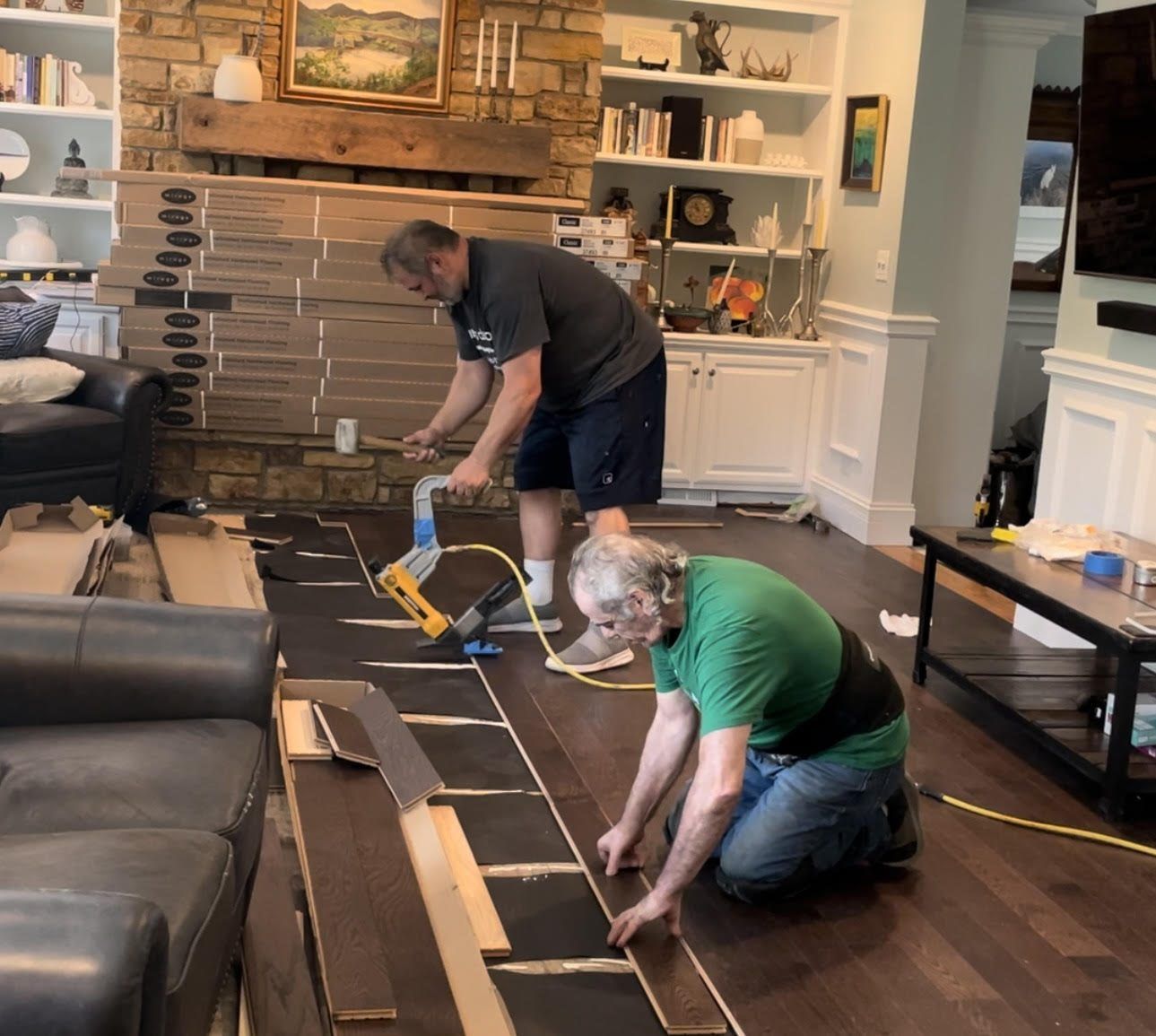
Quality Installs takes on commercial projects alongside residential ones. We're a family-owned flooring company based in Glenview, and every installer is licensed, bonded and insured.
We also carry the maximum general liability and workers' compensation coverage, which landlords and property managers often ask about before work starts.
Thomas C.'s business hired us to install the flooring in its new Glenview office, and this is the Google review that followed.
“We have recently acquired a new office space in Glenview for our business, which necessitated a series of renovations. In this regard, we decided to entrust the task of flooring installation to none other than Quality Installs – a decision that has brought us immense satisfaction. The team exhibited a remarkable level of professionalism, executed the task with exceptional speed, and the results they delivered were nothing short of remarkable.”
You'll find more from our customers on the reviews page.
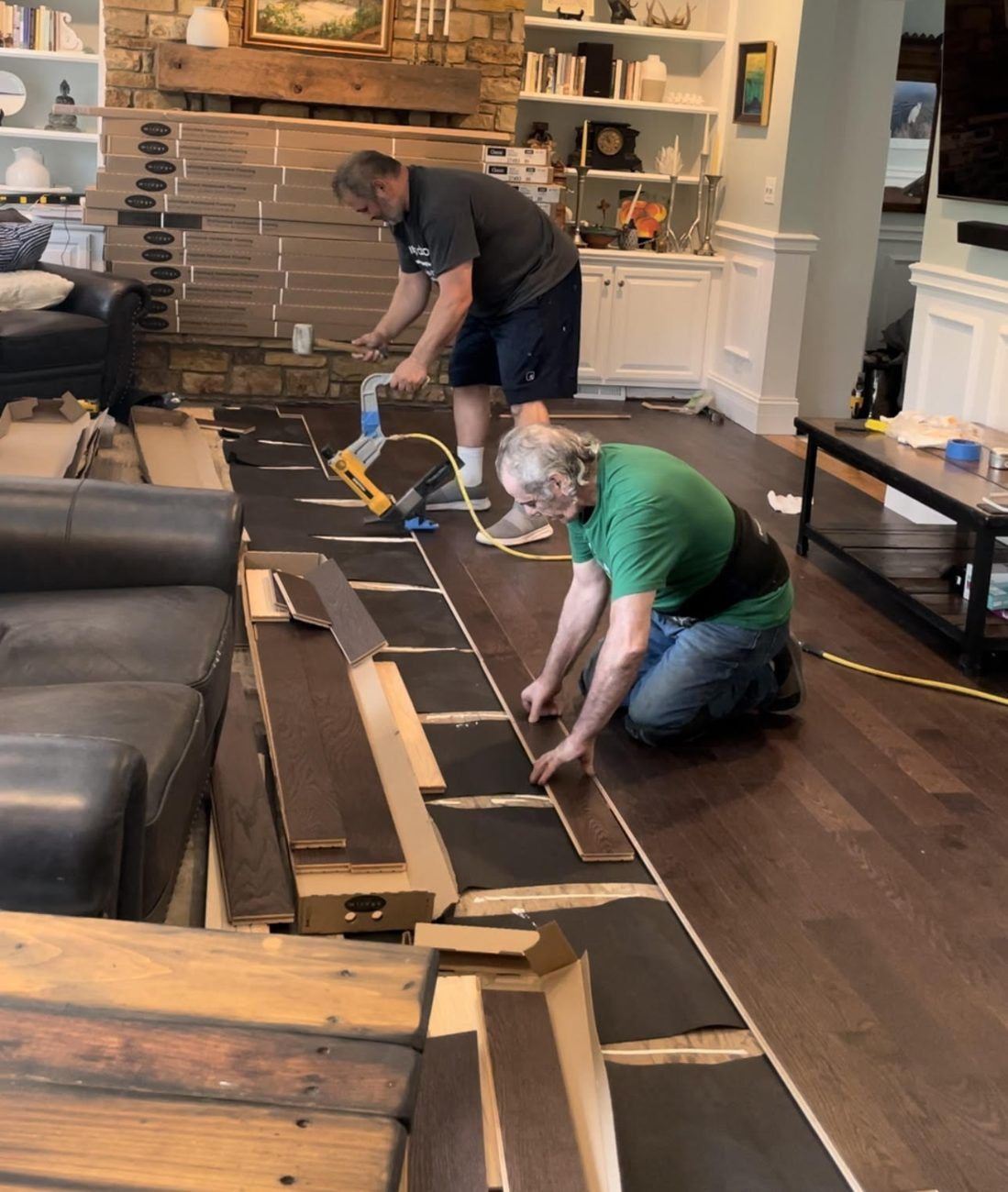
Every commercial job starts with a free estimate. The space gets measured, the subfloor gets a look, and we talk through traffic, budget and timing.
Commercial work needs a plan for which areas go first and how employees and customers get around the work while it's underway. We'll work that out with you at the estimate.
The subfloor gets tested, flattened and cleaned before anything else happens. Then the floor goes down using the method its manufacturer specifies for that product and subfloor.
Transition strips finish doorways and the edges where the new floor meets other surfaces, and long runs of floating floor get the expansion joints they need. The job ends with cleanup and a walkthrough.
A business floor takes far more foot traffic than most homes, so the product's wear rating matters as much as its look. Here's how the three floors we install compare in a commercial space.
Vinyl plank is the workhorse for break rooms, retail floors and lobbies because it handles spills and heavy traffic. A wear layer of 20 mil or more is considered commercial grade.
Laminate works well in offices and other dry areas with steady traffic. For commercial use, look for an AC4 or AC5 rating, the classes usually listed for general and heavy commercial traffic.
Hardwood suits private offices, conference rooms and boutique storefronts where the look matters most and traffic is lighter. Solid hardwood can also be sanded and refinished later instead of replaced.
Many commercial spaces sit on concrete, and every slab needs a moisture test before a new floor goes over it. Manufacturers set the limits, and readings above them have to be dealt with first.
Old carpet tile, loose flooring and leftover adhesive usually have to come up so the new floor has a flat, solid base. Many manufacturers want that base flat to within 3/16 inch over 10 feet.
The heat or air conditioning should be running at normal temperatures before and during the install. It also helps to schedule the floor after painting and other messy work in the space is done.
The schedule depends on the square footage, how much furniture and equipment has to move, whether the work runs in phases and what the subfloor needs. A slab with moisture problems adds time, since it has to be fixed before installation.
Acclimation is part of the plan too, and some manufacturers ask for planks to be unboxed in the space ahead of time on commercial jobs. We'll map out the timeline with you at the estimate.
Commercial estimates are free, and each one is built around your space, your traffic and your schedule. These are the factors that matter most.
What moves the price
Four steps from the first call to the final walkthrough.
Call or send the form, and the crew measures your rooms and quotes the job for free.
Hardwood, vinyl plank or laminate, matched to the room, the foot traffic and the budget.
The crew preps the subfloor and lays the new floor, with a quick turnaround.
You walk the finished floor with the crew, and the job site is left clean.
“Absolutely fantastic job! Quality Installs exceeded our expectations!
Excellent communication from management, very reasonable prices, professional, fast and clean work. Really pleased to have them doing our flooring project. Will definitely contact them in the future and recommend the company.”
“Quality Installs is a business that lives up to its name. Work is thorough, communication is punctual, and working with Bob was a pleasant experience. His team is diligent and they pay attention to detail. Highly recommend!”
“Quality Installs went above and beyond helping me! I'm very impressed with their professionalism, knowledge, cleanliness and recommendations. Love it when someone speaks the truth!!”
Still have a question? Call (847) 361-0099.
We know a closed office or store costs you money, so we'll talk through timing at the estimate. [Bob to confirm: whether Quality Installs can schedule commercial installs after hours, on weekends or in phases]
Yes. Every installer is licensed, bonded and insured, and Quality Installs carries the maximum general liability and workers' compensation coverage. [Bob to confirm: whether Quality Installs provides certificates of insurance to landlords and property managers on request]
In most cases, yes. Hardwood, vinyl plank and laminate all need a firm, flat base, so carpet tile and its adhesive come up first. Some existing hard floors can stay if they're flat and well bonded, and the estimate will tell you which applies.
Vinyl plank is usually the easiest, since it handles damp mopping and spills. Laminate needs a drier cleaning routine, and hardwood needs the most care, with mats at the entrances and quick cleanup of grit and water.
The biggest difference is the wear layer. Residential planks often run 6 to 12 mil, while 20 mil or more is considered commercial grade and holds up longer under heavy foot traffic and rolling chairs.
Choosing Floors
How to choose flooring for high-traffic areas like entryways, kitchens and hallways, plus homes with pets and kids, with a side-by-side comparison table.
Vinyl Floors
What makes vinyl flooring waterproof, how SPC, WPC and flexible vinyl plank differ, what the waterproof label does not cover, and where it matters most.
Choosing Floors
How to choose a flooring contractor on the North Shore, what Illinois requires for contracts and insurance, what a good estimate includes and the red flags.
Tell us about your space, your traffic and your timing, and we'll set up a free commercial flooring estimate.
(847) 361-0099