
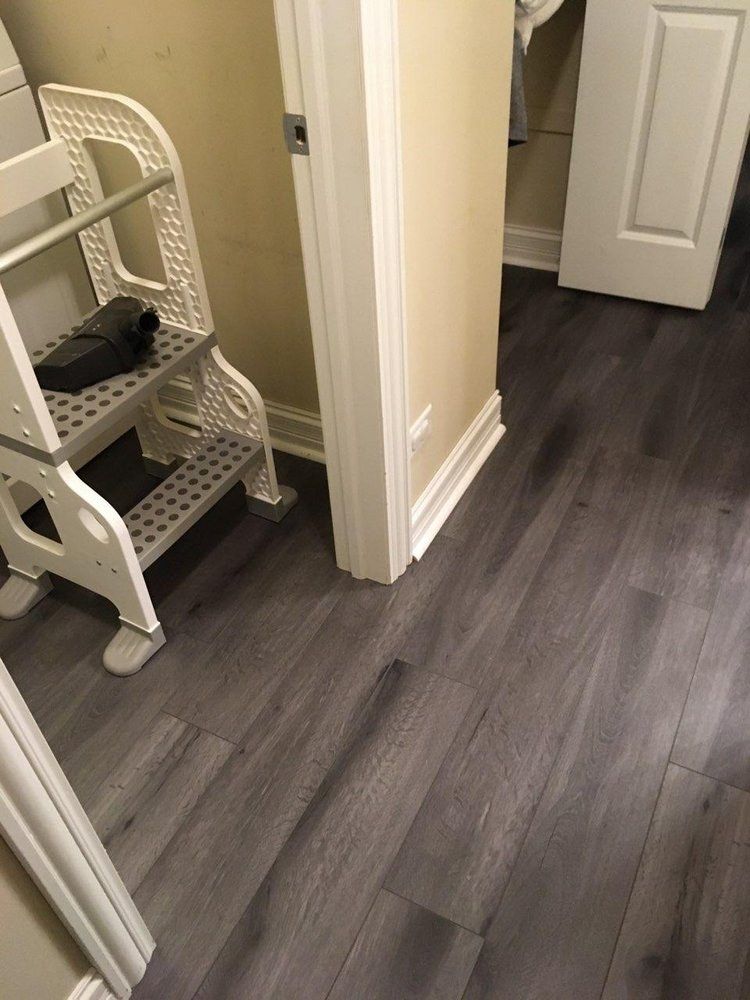
Walk into any flooring showroom and most of the vinyl plank on display says waterproof. The label is mostly true. It’s also easy to read more into it than it promises.
This post covers what’s inside a waterproof vinyl plank, how the three main types differ, what waterproof does and doesn’t cover, and the rooms where you’ll be glad you have it.
What Makes Vinyl Waterproof
Luxury vinyl plank is built from layers of PVC, the plastic that gives vinyl its name. A typical plank has a clear wear layer on top, a printed design layer under it, a core, and often an attached pad on the bottom.
The vinyl layers don’t soak up water the way wood fiber does. That’s the big difference between vinyl and hardwood or traditional laminate, which can swell when water gets into them.
The Three Types of Vinyl Plank
SPC, Stone Plastic Composite
An SPC core has a much higher share of limestone, as much as 75 percent, and no foaming agents. That makes it dense, heavy and thinner than WPC. The density gives it better dent and impact resistance, which also makes it better suited to commercial spaces.
WPC, Waterproof Core
WPC originally stood for wood plastic composite, but the wood dust was dropped from the recipe, and the letters now usually mean waterproof core. The core is foamed, which adds air, cuts weight and makes it softer, warmer and quieter underfoot than SPC. Many WPC planks also come with an attached pad or cork backing.
Flexible Vinyl Plank
Flexible plank, often called dryback, is thinner and bends. It’s typically glued down, which usually means a professional install. Because it follows the subfloor, any bumps can telegraph through over time, so the subfloor has to be smooth and flat.
How They Compare
| SPC | WPC | Flexible Vinyl | |
|---|---|---|---|
| Core | Dense, high limestone content | Foamed vinyl | Thin, flexible vinyl |
| Feel underfoot | Firm | Softer, warmer, quieter | Thin, follows the subfloor |
| Dent resistance | Highest of the three | Lower than SPC | Depends on the subfloor and wear layer |
| Typical install | Floating click | Floating click | Glue-down |
| Subfloor prep | Flat, bridges tiny flaws | Flat, bridges tiny flaws | Smooth and flat, flaws show through |
Waterproof vs Water Resistant
These terms get used loosely, so it helps to pin them down.
- Waterproof generally means a product can take water for an unlimited time without damage, even submerged.
- Water resistant means it handles occasional surface spills if they’re wiped up.
Rigid core vinyl plank is waterproof by that definition. Hardwood isn’t, and laminate claims usually stop at everyday spills. In one independent soak test of laminates sold as waterproof, water wicked into most of the joints, and the tester concluded none should be considered waterproof in the ordinary sense.
What Waterproof Doesn’t Cover
The waterproof label is about the planks. It isn’t a promise about the whole floor.
- Seams and edges. Water that sits on a floating floor can work between the seams to the subfloor. With glue-down and loose-lay products, water can seep to the subfloor too.
- The subfloor. The plywood or concrete under the planks isn’t waterproof, and it can take the damage even when the planks look fine.
- Floods. A floor can be waterproof without being flood-proof. Flooding can damage walls and subfloors, and after a real flood the flooring often has to come up.
- The warranty. A warranty may cover planks exposed to water but not the subfloor or structure around them. Many also exclude floods and overflowing dishwashers or washing machines, so read the water language before you buy.
Signs Water Is Getting Under the Floor
A waterproof floor can hide a problem for a while, because the planks themselves still look fine. Watch for these.
- Plank edges that start to lift, peak or separate
- A musty smell in one part of the room
- Dark staining on baseboards or drywall near the floor
- Spots that feel soft or sound different underfoot
Any of those is worth checking right away. Moisture trapped under a floor can damage it and breed mold and mildew on the subfloor and walls.
Where Waterproof Vinyl Matters Most
- Kitchens. Dishwasher leaks, a refrigerator water line and splashes at the sink.
- Bathrooms. Tub splashes and wet feet, with the edges sealed. Our post on vinyl flooring for bathrooms covers those details.
- Laundry rooms. A washer hose can let go without warning.
- Mudrooms and back entries. Snow and slush come in on boots all winter.
- Basements. Concrete slabs carry moisture even when they look dry. See our guide to vinyl flooring for basements.
- Homes with pets and kids. Accidents and spilled drinks don’t get a chance to soak in.
- Commercial spaces. Break rooms, entries and offices that get mopped often.
In bedrooms, dining rooms and upstairs living spaces, water is less of a factor, and you might choose hardwood or laminate for other reasons.
What to Check on the Box
- Wear layer. Wear layers commonly run from about 6 mil to 20 mil and up, and 20 mil is a solid choice for pets and busy homes. Compare wear layers, not total thickness.
- Core type. SPC for dent resistance, WPC for comfort and quiet.
- Attached pad. If the plank has one, it usually can’t go over another underlayment.
- Moisture and temperature limits. Installation guides set limits for concrete moisture and room temperature, and they vary from product to product.
- Water warranty. Look at what’s covered, for how long and what’s excluded.
Installation Still Decides How It Performs
A waterproof plank on a sloppy install still makes a floor that leaks at the edges. Rigid core guides commonly call for the subfloor to be flat within 3/16 inch over 10 feet, an expansion gap of about 1/4 inch at the walls, and flexible silicone caulk around the perimeter in bathrooms and other wet areas.
Quality Installs is a family-owned team of flooring installers in Glenview, and waterproof vinyl plank is one of the floors we install in homes and businesses. Our vinyl plank installation page has more on how those projects go.