
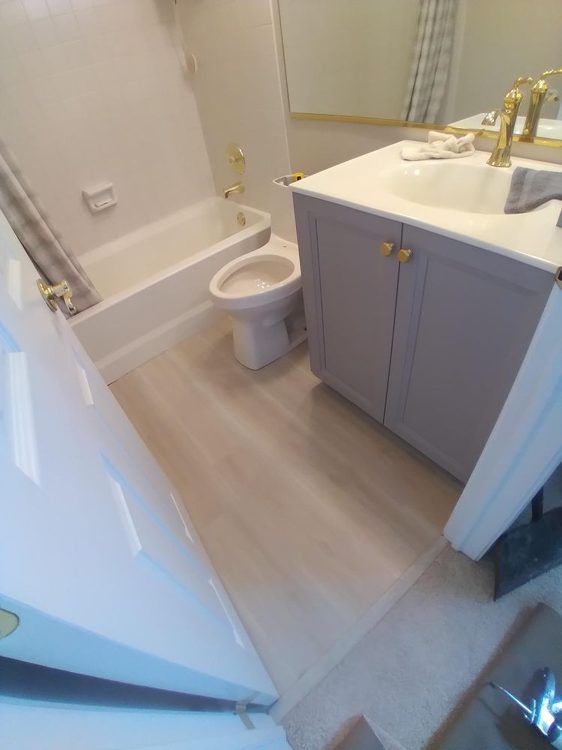
White and near-white vinyl plank makes a room look brighter and bigger, and it makes up for the low light plenty of basements and bathrooms deal with. It’s also the floor color that tells on you.
None of that is a reason to skip it. It’s a reason to pick the right white and set up a few habits on day one. For white floors in hardwood, laminate and tile, see our white flooring guide.
What Counts as White Vinyl Plank
White covers several different looks, and they don’t live the same way.
- Painted or solid white. Crisp and modern, with little visible grain. It shows the most.
- Whitewashed oak. White over a visible wood grain. The grain breaks up dirt and scuffs.
- Bleached or blonde oak. Very light natural wood tones with a hint of warmth.
- White-gray. Pale planks with a gray cast, halfway between white and light gray.
If you want the bright, open feel with less upkeep, whitewashed or very light oak is the easier white to live with. The grain does a lot of hiding.
The Honest Upkeep Picture
What Shows
Dark hair, tracked-in dirt, coffee drips and black scuffs from shoe soles all show quickly on a white floor. Grit by the door shows too, and grit is what slowly dulls a wear layer.
On the plus side, light floors hide fine dust and light-colored pet hair far better than dark floors do.
What Stains It
These are the problems that can’t always be cleaned away.
- Rubber or latex backed mats. Flooring makers warn that these backings can discolor vinyl, and the stain is often permanent. Use mats marked non-staining, with no rubber or latex backing.
- Asphalt and tar. One major maker’s care guide specifically warns against tracking in asphalt or tar from driveways. A walk-off mat outside and a non-staining mat inside both help.
- Direct sun. Long hours of direct sunlight can discolor vinyl, and the heat makes planks expand. Shades on big south and west windows protect the floor.
- Furniture legs. Rubber can react with vinyl, which is why makers call for felt pads or non-staining floor protectors. Pick ones at least an inch across that sit flat on the floor.
The Cleaning Routine
Keep it simple. Dust mop or vacuum with the beater bar off, then damp mop with a pH-neutral cleaner.
Skip products with detergent, vinegar, wax, citrus or polish, which can leave a dull residue that shows on a light floor. Steam mops come up a lot too. At least one major vinyl brand says to skip them unless the product’s care guide says otherwise.
Where White Vinyl Works
White and light plank shine in rooms that need light and see moderate traffic.
- Bathrooms. White plank with white fixtures and tile looks clean, and a rigid vinyl core handles splashes.
- Basements and lower levels. A light floor bounces around whatever light comes through small windows.
- Bedrooms and home offices. Low traffic and few spills keep a white floor looking new.
- Small rooms and condos. Light floors make tight spaces feel bigger.
- Kitchens, with good habits. Spills show sooner, which also means they get wiped sooner.
Where It Struggles
Some spots are hard on a white floor, and it’s better to know that before the planks go down.
- Main entries from the driveway or garage. Grit, salt and asphalt arrive here first. A darker or more textured floor at the door is easier to live with.
- Mudrooms. Wet boots, dog paws and sports bags make this the toughest room in the house for a light floor.
- Homes with dark-haired dogs. You’ll see every shed.
- Sunrooms and rooms with big unshaded windows. Strong sun is hard on any vinyl, and discoloration shows most on white.
If white starts to feel like too much upkeep, a light gray or greige plank keeps most of the brightness with more forgiveness. Our post on gray vinyl flooring walks through those shades.
What White Vinyl Pairs With
A white floor sets a bright stage, and a few choices keep it from feeling cold or washed out.
- Wood furniture. Warm oak and walnut pieces keep a white floor from feeling sterile.
- Black or brass hardware. Dark or warm metals give a white room contrast and something to anchor it.
- Walls in a slightly different white. A wall color a shade warmer or cooler than the floor looks intentional, while an exact match tends to wash everything out.
- Rugs with safe backings. A colorfast woven rug adds texture and protects busy paths, as long as its backing won’t react with the vinyl.
Choosing a White That Lasts
Undertone
Whites lean warm, toward cream and yellow, or cool, toward blue and gray. Hold samples next to your trim, cabinets and wall paint. A cool white floor beside creamy trim can make the trim look dingy, and the reverse happens too.
Finish and Texture
Matte and low-sheen planks with some texture hide scuffs, footprints and fine scratches much better than smooth, glossy white. This matters more on white than on any other color.
Wear Layer
The clear wear layer on top protects the printed look. Wear layers commonly run from about 6 mil to 20 mil and up, and 20 mil is a solid pick for pets or busy households. Compare wear layers, not total thickness, since the total also counts the core and pad.
Edges
Beveled edges collect dirt, and on a white floor that dirt shows as thin dark lines. A square edge or a very slight bevel keeps a light floor looking cleaner.
Installation Notes for Light Floors
Light, low-sheen floors are forgiving about tiny surface flaws, but a dip in the subfloor still shows up as a joint that flexes or a spot that sounds hollow. Rigid core planks generally need the subfloor flat within about 3/16 inch over 10 feet.
Mixing planks from several cartons spreads out the print variation, which keeps a whitewashed floor from looking striped. The perimeter gap gets covered with trim, so plan white baseboards and quarter round along with the floor.
Quality Installs is a family-owned team of Glenview flooring installers, and vinyl plank is one of the floors we install in homes and businesses. You can read more on our vinyl plank installation page.