
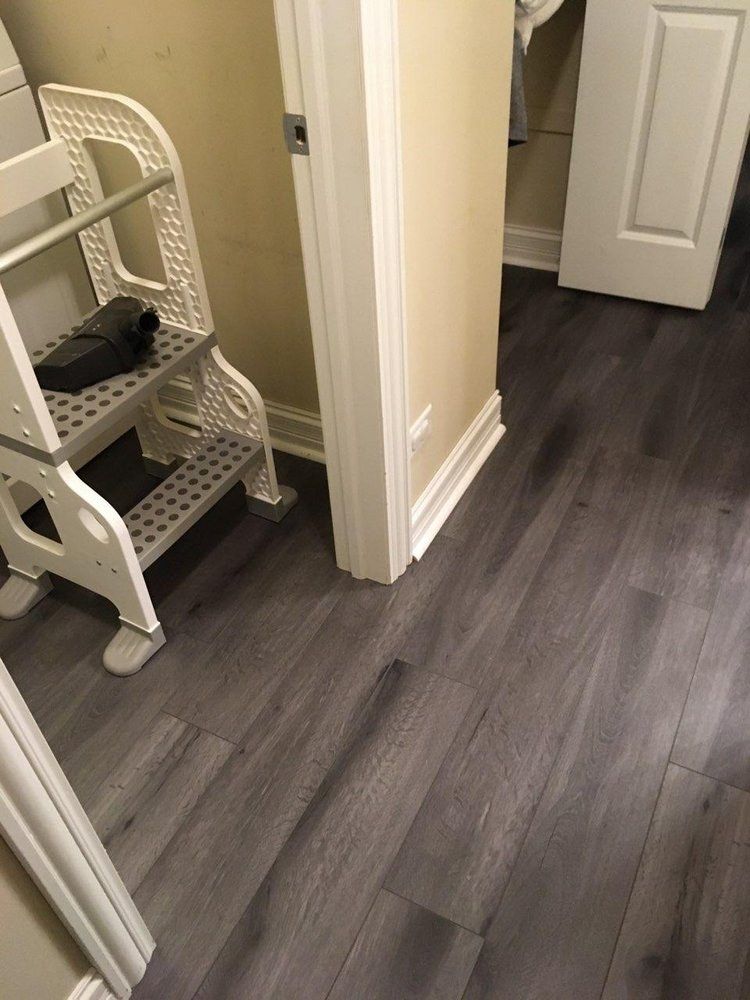
Laminate and hardwood can look surprisingly alike from across the room. Up close and over the years, they behave very differently.
We install both, so here’s a fair comparison on the things that matter most, followed by who each floor suits.
The Short Version
Laminate costs less, resists scratches better and handles spills better if you buy a waterproof line. Hardwood costs more, feels and sounds more solid, can be refinished several times and tends to carry more weight with buyers.
Side by Side
| Factor | Laminate | Hardwood |
|---|---|---|
| Installed cost, 2026 national guides | About $5 to $12 per square foot | About $6 to $18 per square foot |
| Scratches and dents | Hard wear layer rated by AC class, but edges can chip | Softer surface that scratches and dents, but sanding repairs it |
| Water | Water-resistant or waterproof lines, with warranty conditions | Not waterproof, so spills need quick cleanup |
| Refinishing | Can’t be sanded or refinished | Solid wood can typically be sanded six to eight times |
| Lifespan | About 10 to 30 years | Decades, with refinishing |
| Resale | No comparable figure in the NAR data we checked | Strong cost recovery in NAR’s 2022 report |
| Feel and sound | Floats on a pad and can sound hollow | Fastened down and feels solid underfoot |
Cost Factors
This Old House’s 2026 guides put installed laminate at about $5 to $12 per square foot and hardwood at about $6 to $18. Materials explain most of the gap, at about $1 to $4 per square foot for laminate and $3 to $10 for hardwood. Labor is similar, at about $4 to $8 for laminate and $3 to $8 for hardwood.
Long-term costs differ too. Hardwood can be renewed by sanding and refinishing, which This Old House prices at about $3 to $8 per square foot. Worn laminate gets replaced instead.
Treat all of these as typical national ranges that vary by species, product, region and the condition of your subfloor.
Durability
Laminate’s clear melamine wear layer is very hard, and the AC rating tells you how much traffic it’s built for. That makes it a strong choice for dogs, kids and busy entries. Its weak spots are chipped edges and swelling if water gets into the joints.
Hardwood is softer at the surface. It scratches and dents more readily, but the damage is repairable, and a full refinish takes the floor back to fresh wood.
Water
Neither floor belongs in a bathroom with a shower. Laminate has the edge on spills if you buy a waterproof line, but the warranties are specific. Pergo’s Outlast+ warranty, for example, requires spills to be removed within 24 hours and excludes flooding and leaks.
Hardwood isn’t waterproof, though some engineered lines, like Shaw’s Repel hardwood, add a water-resistant finish. Wipe spills quickly, put mats at sinks and doors, and keep indoor humidity steady to limit gaps and cupping.
Refinishing
This is hardwood’s biggest advantage. According to Brett Miller of the National Wood Flooring Association, most solid wood floors can be sanded six to eight times over their service life, with each sanding removing roughly 1/32 to 1/16 inch of wood.
Engineered hardwood depends on its wear layer. The same article advises against sanding an engineered floor with less than 3/32 inch of wear layer.
Laminate can’t be sanded or refinished at all. Its look is a printed layer, so once the wear layer is gone, the floor needs replacing.
Resale
Real wood is a known selling point. In NAR’s 2022 Remodeling Impact Report, refinishing hardwood floors was estimated to recover about 147% of its cost at sale, and new wood flooring about 118%.
In the 2025 edition, new wood flooring earned a joy score of 9.1 from homeowners, among the highest of any project. The NAR materials we checked include no comparable figure for laminate.
Feel and Sound
Laminate floats on a pad, which gives it a slightly cushioned feel but more noise underfoot than nailed-down flooring. Underlayment reduces sound, so ask about it if hollow footsteps bother you. Some people also find laminate slippery in socks.
Nailed-down hardwood feels solid and natural, with the warmth of real wood underfoot.
Installation and Where Each One Can Go
Laminate clicks together and floats over a pad, with an expansion gap at the walls. It can often go over an existing floor that’s sound, level and dry, and some lines, like Shaw’s Oak Crest, are approved above, on or below grade.
Solid hardwood is usually nailed down over a wood subfloor and is generally kept out of basements. Engineered hardwood is more flexible about where it can go, which is one reason it’s common over concrete.
Both floors need a flat, dry subfloor, and both look only as good as the prep underneath them.
Living With Each Floor
Day to day, the routines are similar. Sweep or vacuum often, use mats at the doors and put felt pads under furniture.
The differences show up over time. Laminate wants a barely damp mop and no steam, wax or polish, and when it’s worn out, it’s replaced. Hardwood can be screened and recoated or fully sanded and refinished, so a tired floor can look new again.
For pets and kids, laminate’s harder surface takes daily wear well. Hardwood will show scratches sooner, but those scratches can be sanded away when you refinish.
Which One Should You Pick
- Choose laminate if you want a wood look on a tighter budget, have pets or kids, need spill protection in a kitchen, or plan to replace the floor rather than refinish it.
- Choose hardwood if you plan to stay a long time, want a floor you can refinish, care about resale and want the most natural feel and sound underfoot.
- Mix them if it suits your house. Hardwood in the living and dining rooms with waterproof laminate in a kitchen or mudroom can be a sensible split.
For more on each, read our honest guides to whether hardwood is right for you and whether laminate is right for you.
Quality Installs is a family-owned flooring installer in Glenview that installs both hardwood and laminate. Our laminate flooring installation page explains how we approach laminate projects.