
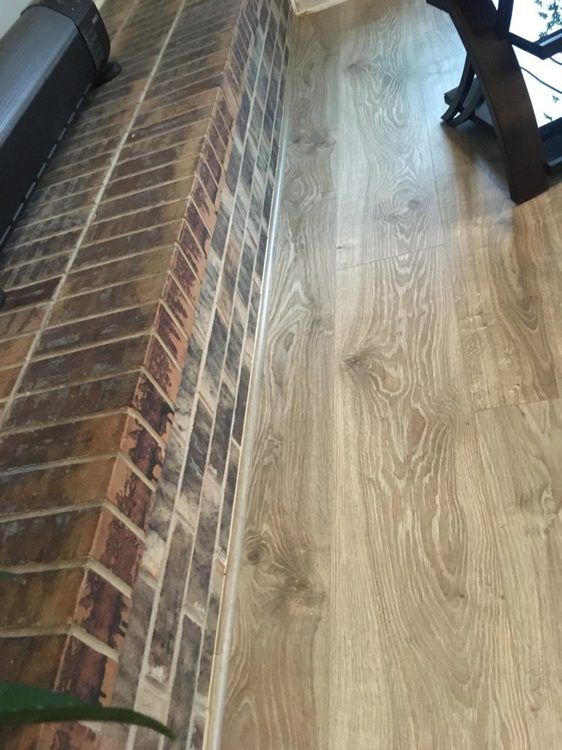
Hickory is the floor people pick when they want something tough with a lot of personality. It’s harder than oak, it swings from cream to deep brown from board to board, and it hides the wear of a busy house better than most woods.
That bold look isn’t for everyone, and hickory moves more with the seasons than oak does. Here’s how hard it is, what the grades mean and where it works.
What You’re Buying When You Buy Hickory
Most hickory flooring is really a mix of species. The Wood Database notes that various hickories and pecans are typically mixed together and sold simply as hickory, and the NWFA says flooring mills have traditionally mixed them.
Each brings its own colors. The NWFA describes hickory heartwood as tan or reddish with white to cream sapwood, and pecan heartwood as reddish brown with dark brown stripes. Within a single board, the spring and summer growth can differ sharply in color too.
Boards that carry both pale sapwood and darker heartwood get a rustic, two-tone look that’s sometimes sold as calico hickory.
How Hard Is Hickory
On the Janka scale, which measures how much force it takes to press a steel ball into wood, hickory sits near the top of the domestic species.
| Species | Janka Hardness (lbf) |
|---|---|
| Brazilian cherry (jatoba) | 2,690 |
| Hickory (shagbark) | 1,880 |
| Hard maple | 1,450 |
| White oak | 1,350 |
| Red oak | 1,220 |
| Black walnut | 1,010 |
Those numbers come from The Wood Database. Flooring references such as Wood Floor Business and Mullican list hickory at about 1,800 to 1,820, which still puts it well ahead of oak.
In plain terms, hickory is roughly half again as hard as red oak. It’s a good match for dogs, kids, kitchen chairs and the steady grind of an entry hall.
Hardness won’t stop scratches in the finish, though. A lower sheen helps, and the NWFA points out that the less sheen a floor has, the less you’ll notice small scratches and normal wear.
Hickory Flooring Grades Explained
Grades describe how a floor looks, not how well it’s made. Bruce, citing the NWFA grading system, notes that knots and streaks are allowed only when they don’t compromise the strength and soundness of the board.
The NWFA grading rules give hickory and pecan their own grades.
| Grade | What You’ll See |
|---|---|
| Select | A clean face with small, occasional knots, while natural color variation is allowed |
| No. 1 Common | Varied colors and character, including heavy streaks and small knots |
| No. 2 Common | A rustic look with knot holes, bird pecks and worm holes that fill readily |
| Clear Red or Clear White | Boards sorted for deep red-brown heartwood or creamy sapwood |
Here’s the part that surprises people. In hickory grading, natural color isn’t treated as a defect, so even Select hickory can run from cream to deep brown in the same room. If you want a calmer floor, look at the color-sorted grades or a different species.
Retail names like character or rustic don’t appear in the NWFA’s hickory grades, and each mill defines them its own way. One maker’s character grade, for example, blends Select, No. 1 Common and No. 2 Common boards. Ask which NWFA grade a product follows before you compare two floors.
Hickory Moves More Than Oak
Hickory’s toughness comes with a tradeoff. Its shrinkage figures in The Wood Database run higher than red oak’s, and Wood Floor Business notes that a 5-inch hickory plank shrinks more than a 5-inch red oak plank for the same change in moisture.
A more recent Wood Floor Business article goes further and calls hickory and pecan notorious for their dimensional instability. Some manufacturers set a tighter humidity range for hickory, such as 35 to 55 percent.
Here’s what that means at home.
- Let the flooring reach the right moisture level first. Installation instructions set acclimation by moisture readings, so follow the manufacturer’s numbers rather than a set number of days.
- Keep indoor humidity steady. In Chicago-area winters, the furnace dries the air, and the NWFA notes that small gaps are normal if they close again in humid months.
- Consider narrower boards if movement worries you, since wider boards show bigger seasonal gaps.
- Use engineered flooring for a basement. The NWFA notes that solid wood belongs on or above ground level.
Our guide on how to maintain your hardwood floors covers humidity through the seasons in more detail.
Color Change and Staining
Hickory changes color faster than oak. AHF Products puts pecan and hickory among the domestic species that change quickly, while it describes oak as slow to change.
It isn’t an easy wood to stain, either. Wood Floor Business notes that hickory is hard to stain, that factory color doesn’t penetrate the wood fiber, and that matching factory samples on site is nearly impossible. The practical move is to pick a prefinished color you like as it is, or to enjoy hickory’s natural tones.
Where Hickory Floors Work Best
Hickory earns its keep in the rooms that take the most abuse.
- Kitchens and family rooms, where chairs slide and things get dropped
- Homes with dogs, where hardness helps against dents from claws
- Rustic, farmhouse or cabin-style rooms, where the color swings look intentional
- Open floor plans, where one tough floor can run through several spaces
Quality Installs is a family-owned flooring company in Glenview, and every installer on the team is licensed, bonded and insured. You can learn more about our hardwood flooring installation work.
Hickory is a tougher fit for formal rooms where you want calm, even color, or for anyone who finds strong patterns busy. If you want good hardness with a quieter look, compare it with oak in our red oak flooring guide.