
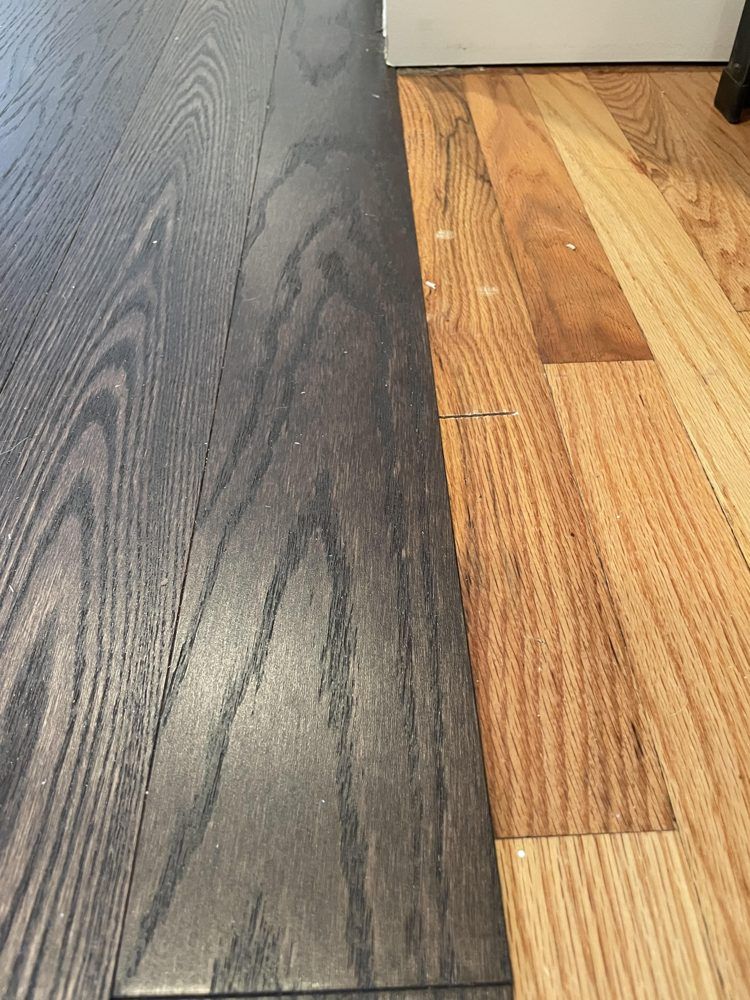
Light hardwood brightens a room and works with almost any furniture. Getting a light floor is mostly about the species. Keeping it light is about the finish and the sun.
Here’s how the main light species compare, and what makes a pale floor drift darker or more yellow over time.
The Main Light Wood Species
| Species | Janka Hardness (lbf) | Natural Tone |
|---|---|---|
| Hard maple | 1,450 | Creamy white, sometimes with a golden or reddish hue |
| White oak | 1,350 | Light to medium brown, often with an olive cast |
| White ash | 1,320 | Light brown heartwood with wide beige sapwood |
Hardness and color notes are from The Wood Database. Janka figures measure the force needed to press a steel ball into the wood, so higher numbers mean better resistance to dents.
White Oak
White oak is the most versatile light floor. Its natural tone runs from tan to soft gray, and flooring maker Mullican describes grayish-brown undertones that work with warm or cool decor.
It has practical advantages too. White oak’s pores are plugged with tyloses, and Mullican notes that its tighter grain makes it slightly more water resistant than red oak. Old House Online notes that white oak is native to the upper Midwest.
Watch two details. Lower grades carry blonder sapwood that takes stain differently, and Wood Floor Business notes that white oak’s tannins can cause discoloration or streaking under some finishes unless a good sealer blocks them.
Hard Maple
Maple is the palest of the three, with a fine, even grain and a creamy color. It’s also hard, at 1,450 lbf, and The Wood Database notes it’s used for everything from basketball courts and bowling alleys to homes.
Its smooth grain cuts both ways. Mullican notes that maple’s fine grain makes it prone to visible scratches, and The Wood Database warns that it can blotch when stained. The Maple Flooring Manufacturers Association advises against staining maple flooring at all.
White Ash
Ash looks like a lighter, livelier cousin of oak. The Wood Database describes a medium to coarse texture similar to oak, light to medium brown heartwood and wide beige sapwood, and Wood Floor Business notes that ash takes stain well.
Supply is the catch. The emerald ash borer, first detected in Michigan in 2002, has killed hundreds of millions of ash trees across the United States and Canada, according to The Wood Database. Wood Floor Business says ash is still available, but it’s worth asking about stock before you fall for a sample.
Why Light Floors Get Darker
A light floor can drift darker or more yellow for three main reasons.
- The wood reacts to light. All wood changes color as it oxidizes and sees sunlight. Wood Floor Business notes that oak and maple show very little change over time, while American cherry and most exotic species change a lot. Shaw Floors notes that light woods like pine can darken.
- The finish ambers. The NWFA describes oil-based finishes as amber in color, and Wood Floor Business notes that oil-modified finishes generally amber over time while water-based finishes generally stay clear.
- Sapwood and heartwood age differently. Wood Floor Business points out that the two parts of a board age at different rates, so a pale floor can look more varied after a few years.
On maple, the finish does most of the changing. The Maple Flooring Manufacturers Association notes that urethane oil finishes tend to amber, with the biggest change between the sixth month and the end of the first year.
How to Keep a Light Floor Light
- Start with a stable species. Oak and maple change less than cherry or exotics.
- Choose a clear finish. Family Handyman notes that water-based polyurethane dries clear, stays clear and suits blonde woods like maple and birch. The NWFA also describes water-based finishes as normally clear.
- Ask about factory finishes. On prefinished flooring, ask what the finish is and whether it ambers. Some makers, such as AHF Products, say their finishes stay clear for their whole life.
- Control the sun. Blinds, curtains or window film slow color change in bright rooms, and moving rugs and furniture now and then helps the floor age evenly.
- Skip wax and polish. The NWFA describes wax as amber, and Mohawk’s engineered wood care guide advises against wax and polishes.
- Choose a lower sheen. The NWFA notes that the less sheen a floor has, the less you’ll notice small scratches, which matters on pale maple.
Natural Oil Finishes on Light Floors
Penetrating oils and hardwax oils soak into the wood instead of forming a film on top, according to the NWFA. The result is a low-sheen look that stays close to raw wood.
Oils vary in how much they warm the color, so look at a finished sample before you choose one for a pale floor. Ask how the oil is maintained, too, since upkeep differs from a film finish.
Where Light Floors Work Best
Light floors suit small rooms, north-facing rooms and spaces with plenty of white trim. They hide dust and pet hair better than dark floors, though they show spills and dark grit sooner.
In kitchens and entries, white oak’s extra water resistance and maple’s hardness are both useful. Pair either one with a low-sheen clear finish and good mats at the doors.
Bob Leibrandt founded Quality Installs in 2004 and still runs it. Our family-owned team of flooring installers in Glenview offers personalized consultations, and you can read more about our hardwood flooring installation work.
Weighing white oak against red oak? Our red oak flooring guide compares the two side by side, and our post on how to maintain your hardwood floors covers everyday care for any light floor.