
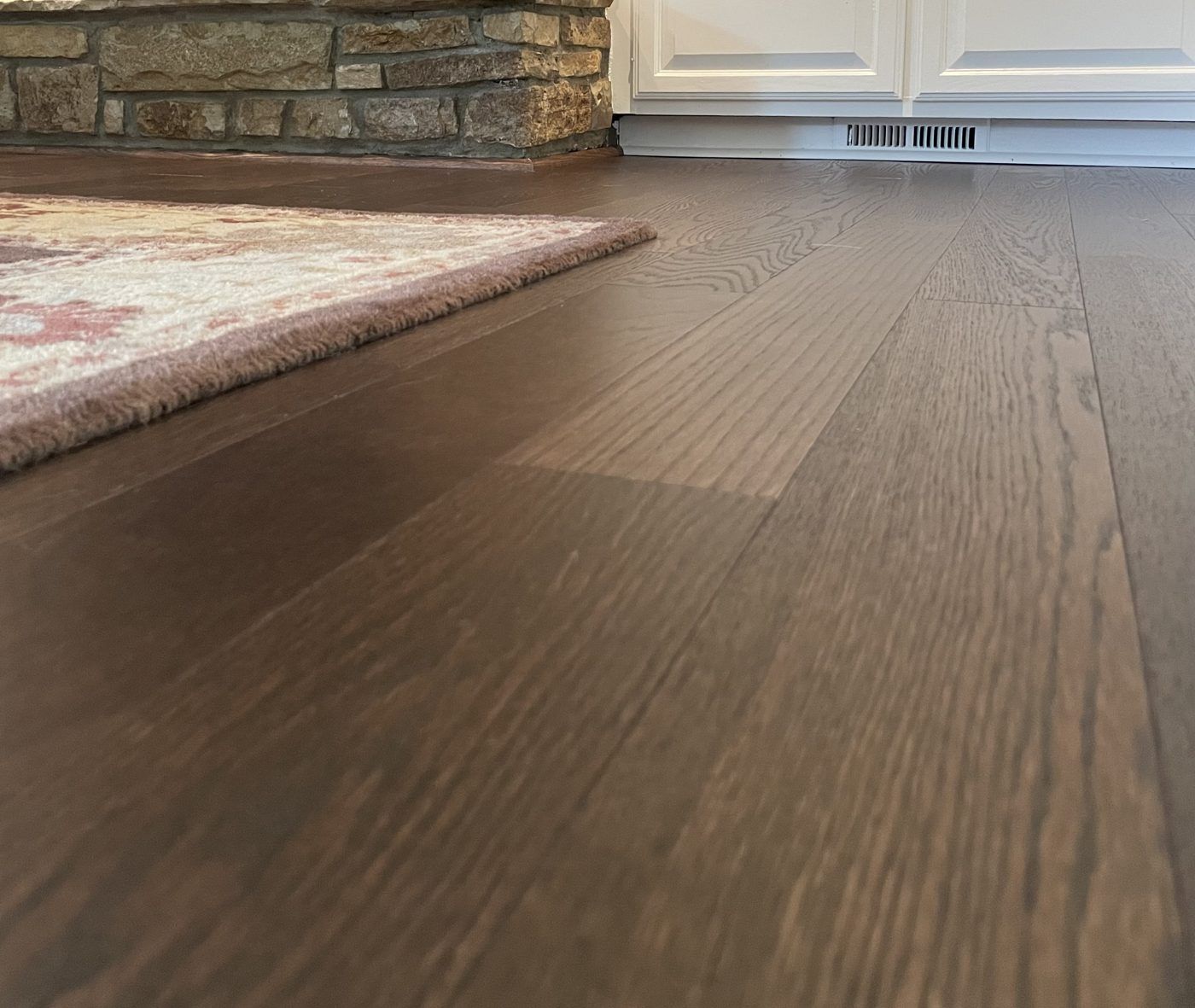
A gray hardwood floor can look soft and weathered or crisp and modern, depending on how the gray gets there. This guide covers real wood floors in gray, from the species and stains to the textures and finishes that create the look.
If you’re after gray in a waterproof floor instead, our post on gray vinyl flooring covers that side.
Where the Gray Comes From
Common flooring woods are naturally tan, brown or reddish, not gray. Gray hardwood usually comes from a mix of a few things.
- A cool-toned species that gives the gray a neutral base
- Stain or a tinted oil that adds the color
- Texture, such as wire brushing, that changes how the surface reads
- Chemical treatments like fuming or smoking, which darken oak without pigment
The Best Species for Gray Floors
The wood underneath decides how a gray stain behaves.
| Species | Natural Tone | How It Takes Gray |
|---|---|---|
| White oak | Tan with an olive or gray cast | The easiest base for a clean gray |
| Red oak | Pinkish brown | Pink can show through lighter grays |
| Hard maple | Creamy white | Blotches easily, so stain is risky |
| Hickory | Strong light and dark contrast | Hard to stain, and busy under gray |
| White ash | Light brown with beige sapwood | Takes stain well, with oak-like grain |
White Oak
White oak is the usual starting point. Flooring maker Mullican describes its natural tint as yellow to gray, with grayish-brown undertones that pair with warm or cool finishes, and The Wood Database notes a common olive cast.
Wood Floor Business adds two cautions. Lower grades carry blonder sapwood that takes stain differently, and white oak’s tannins can cause discoloration or streaking under some finishes unless a good sealer blocks them. Ask what goes under the gray, not just what color it is.
Red Oak
Red oak can go gray, but it pushes back a little. Mullican notes that red and white oak absorb stain differently because they start as different colors, and that the difference is easiest to see with lighter stains. With pale grays, red oak’s pink tint tends to come through.
Darker charcoal tones hide it better. For more on red oak’s color and stain behavior, see our red oak flooring guide.
Maple, Hickory and Ash
Maple is a hard path to gray. The Wood Database notes that it can blotch when stained, and the Maple Flooring Manufacturers Association advises against staining maple flooring at all.
Hickory has its own problem. Wood Floor Business notes that it’s hard to stain and that factory color doesn’t penetrate the wood fiber, so gray hickory still shows plenty of its natural light and dark contrast.
Ash is an underrated option. The Wood Database describes a texture similar to oak, and Wood Floor Business notes that ash takes stain well, though supply has been strained by the emerald ash borer.
Choosing a Gray Stain
Gray covers a wide range. Some grays lean warm and brown, sometimes called greige, others lean cool toward blue or silver, and charcoal sits close to black.
A few habits help the color hold up.
- Test on your species. The same stain looks different on white oak, red oak and ash.
- Go a shade deeper if you’re torn. Wood Floor Business notes that stained prefinished flooring, especially in darker tones, shows significantly less color change over time.
- Pick a clear finish. Wood Floor Business also notes that oil-modified finishes generally amber over time while water-based finishes generally stay clear. Amber over gray pulls it warm.
- Expect a little drift anyway. Shaw Floors lists oak among the woods that may lighten in sunlight, and AHF Products says the most dramatic changes come in the first six months after installation.
Wire-Brushed Gray Floors
Wire brushing runs stiff wires across the boards to remove the softer wood from the surface. Urbanfloor describes the result as a hardwearing texture that brings out the natural grain.
On a gray floor, that texture adds depth, because the harder grain stands slightly proud of the surface instead of lying flat under the color. Mullican notes that brushed finishes add character to white oak, and the combination suits gray well.
Pair the texture with a low sheen. The NWFA notes that the less sheen a floor has, the less you’ll notice small scratches and normal wear.
Fumed and Smoked Oak
Fuming is a different route to a weathered look. Raw oak is exposed to ammonia, which reacts with the wood’s natural tannins and darkens it without stain.
The results depend on the wood. White oak, which is high in tannin, turns a deep brown, while red oak may turn greenish instead. Because the color comes from each board’s own chemistry, boards from the same tree can come out noticeably different.
One UK flooring supplier notes that fuming can take up to 30 days in an airtight chamber, and that on fumed engineered oak the color can run through the entire wear layer. It also notes that smoked floors lighten and mellow over time.
On its own, fumed oak reads as smoky brown rather than true gray. If you love that depth but want a cooler floor, look at fumed or smoked samples side by side with gray-stained white oak before you decide.
Living With Gray Hardwood
Mid-tone grays are forgiving. They hide dust and pet hair better than very dark floors and show grit less than very pale ones.
Care is the same as for any finished hardwood. Use a cleaner made for your floor’s finish, skip wet and steam mops, and keep humidity steady, which the NWFA puts at 30 to 50 percent year-round.
Quality Installs, a family-owned team of flooring installers in Glenview, installs hardwood, vinyl and laminate in homes and businesses, so you can weigh gray hardwood against gray vinyl or laminate with one team. You can read more about our hardwood flooring installation work.